Calluna vs. Erica Heather: Which Type Should You Grow?
Heather looks simple on a garden centre bench: a tray of pink and purple cushions, every pot labelled the same way. Get them home and the differences start to matter. Calluna and Erica are different plants with different soil needs, different flowering seasons and different pruning calendars, and the wrong one in the wrong spot will sulk for years before it gives up. Choosing between them takes about two minutes once you know what to look for. Start with your soil, then decide which season you want flowers in.
Calluna Is One Plant. Erica Is a Crowd.
Calluna contains a single species, Calluna vulgaris, known as Scots heather or ling. Every Calluna you buy is a cultivar of that one plant, which makes the genus unusually predictable. The habit, the soil preference and the care are the same whether you choose a golden form or a double-flowered white. What varies is size, flower colour and foliage.
Erica is a genus of several hundred species, of which perhaps half a dozen earn garden space. Erica carnea (now often listed as Erica herbacea), E. x darleyensis, E. cinerea, E. vagans and E. tetralix are the ones you will meet most often, plus the taller tree heaths. Each has its own requirements, so "Erica" on a label tells you far less than "Calluna" does. Read the species name before anything else on the tag.
Foliage: Colour Versus Texture
Calluna foliage is made of tiny, scale-like leaves packed tight along the stems, which gives the plant a solid, grounded texture closer to a conifer than a flowering shrub. That density is why Calluna holds colour so well. Cultivars run through golden, orange, russet, silver and near-black green, and many shift shade with the seasons; some turn bronze or deep burgundy in cold weather and return to gold in spring. If foliage is the reason you are planting heather, Calluna is the plant.
Erica foliage is usually needle-like and arranged in whorls, giving a finer, more open look. Most species are green to grey-green, with a few golden forms, and the leaves read as a soft haze behind the flowers rather than as a feature in themselves. Erica carnea, for instance, is the plant you want as a low green carpet under spring bulbs.
Bloom Time: The Real Deciding Factor
This is where the two separate cleanly, and it is usually the fastest way to choose.
Calluna: late summer into autumn
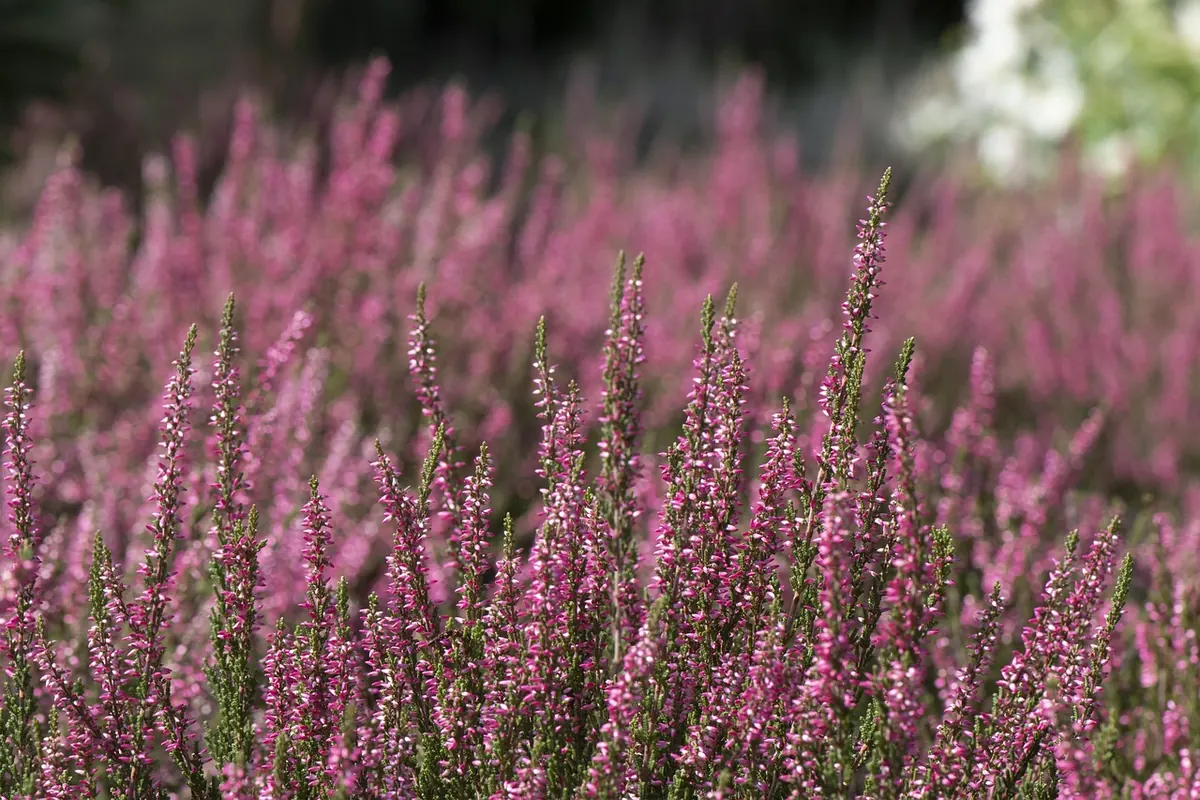
Calluna vulgaris flowers from roughly July to October, depending on cultivar and climate. The flowers are small bells held in upright spikes, and they are good bee forage at a point in the year when little else is open.
Winter and spring: the carnea group
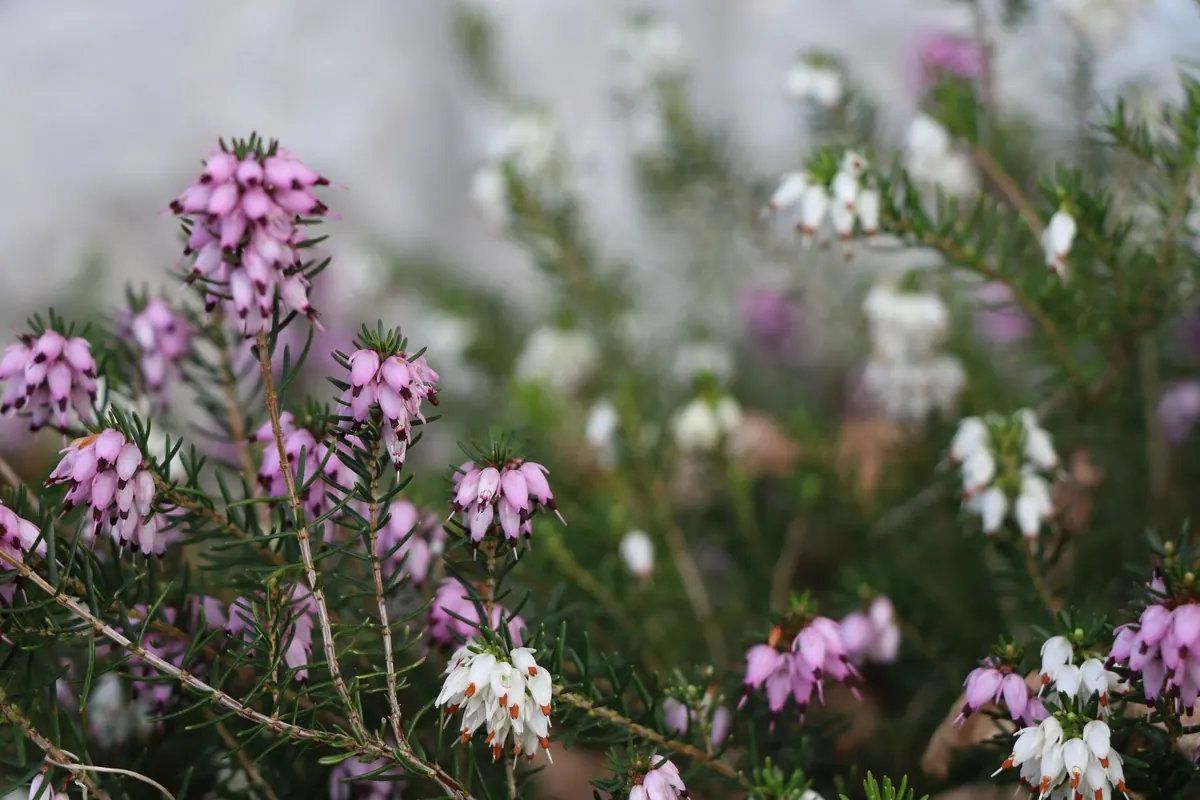
Erica carnea and E. x darleyensis bloom from as early as December in mild gardens through to April. Nothing much else is doing anything then, which is the whole point of them.
Summer: the remaining Ericas
Erica cinerea, E. vagans and E. tetralix flower in summer into early autumn, filling the gap between the spring heaths and the Calluna. Erica arborea var. alpina flowers in spring on plants that eventually reach waist height, and it is far less hardy than the others.
Plant a mix of species rather than hunting for one miracle plant, and you can have heather in flower for most of the year.
Soil and Site: The Acid Question
Calluna needs acid soil, somewhere around pH 4.5 to 6, and it wants that soil free-draining and low in nutrients. It will not tolerate chalk or lime, and it dislikes heavy clay that sits wet in winter. Full sun suits it best; in shade it grows loose and leggy and the foliage colour dulls. On alkaline ground, grow Calluna in containers or a raised bed filled with ericaceous compost.
Erica splits in two, which is the most useful thing to know about the genus. Erica carnea and E. x darleyensis tolerate neutral to slightly alkaline soil and cope with heavier ground as long as drainage is reasonable. That makes them the practical choice for most gardens. The summer-flowering heaths are more particular: E. cinerea wants acid, sharply drained ground; E. tetralix is happy in acid soil that stays damp; and E. vagans sits in the middle, managing neutral soil if it never gets waterlogged.
Hardiness and Winter Wet
Calluna vulgaris is generally hardy in USDA zones 4 to 6, with some cultivars rated colder, and it handles hard frost well. What kills it in wet, cold climates is winter waterlogging and cold drying wind, not the temperature itself. Erica carnea and E. x darleyensis are usually rated zones 5 to 7. Erica cinerea is the one to be careful with, being the heath most likely to die out in a wet, cold winter. Tree heaths need mild conditions and are best in zones 8 and 9.
Treat hardiness ratings as guidance rather than gospel, since they vary between references and between cultivars. In a wet climate, spend your effort on drainage and shelter before you worry about the number on the label.
Pruning: The Same Idea, Different Timing
Both plants want the same treatment: a light annual trim that removes the previous season's flowers and a little of the growth behind them. Both resent being cut back into old, leafless wood, which usually does not regrow.
- Calluna: trim after flowering, from late summer through to early spring before new growth starts. Take off the spent flower spikes and a centimetre or so of stem behind them.
- Erica carnea and E. x darleyensis: trim once flowering ends, usually in mid to late spring. Shearing off the faded flower heads keeps the plant dense and stops it opening up in the middle.
- Erica cinerea, E. vagans and E. tetralix: trim straight after their summer or autumn bloom, while there is still time for a little regrowth before winter.
- Old, woody plants: do not attempt a hard cut in one go. Cut one third of the stems back hard each year for three years and the plant will gradually rebuild from the base.
Which Should You Grow, and How Do You Plant It?
If your soil is acid and sunny, grow both. Use Calluna for foliage colour and autumn flowers, with a run of Erica carnea along the front for winter and spring. If your soil is neutral or alkaline, that decision is made for you: choose Erica carnea or E. x darleyensis and keep Calluna for pots. On heavy clay, the same answer applies unless you are prepared to build a raised bed.
Whichever you choose, the planting routine is nearly identical:
- Plant in spring or early autumn, never in midsummer heat or frozen ground.
- Space small varieties about 25 to 30 cm apart and larger ones 45 to 60 cm, so they knit into a carpet without smothering each other.
- Water through the first two summers. These are shallow-rooted plants that dry out faster than they look like they should.
- Mulch with bark or leaf mould, keeping it clear of the stems, and skip rich fertiliser — heathers grow best on lean ground.
- Group them in threes and fives rather than dotting single plants around a border. Heather reads as a colony, not as a specimen.
Get those basics right and either genus will settle in for years of quiet, low-maintenance cover — with the bonus of flowers in a season when the rest of the garden has gone quiet.
Photo: Milbela / Pexels